

Insurance Systems for Space Commercialization


Key Takeaways

Space commercialization requires sophisticated insurance systems that manage risk from the drawing board to the final de-orbiting phase. These financial structures ensure that private and public missions can proceed with the economic stability needed to sustain long-term orbital projects.

  • Precise underwriting separates launch-phase perils from ongoing in-orbit operational risks.
  • Insurance functions as an engineered system for transferring catastrophic financial liability.
  • Coverage triggers are increasingly tied to remote diagnostic findings and sensor data.
  • Dispute resolution often relies on specialized technical arbitration rather than traditional court litigation.
  • Effective risk management requires balancing physical asset valuation with future revenue loss projections.

The Foundations of Space Insurance and Risk Identification

The expansion of the global space industry depends on a robust framework that recognizes the unique volatility of vacuum-based environments. When organizations plan to place assets into orbit, they must identify every factor that could disrupt the mission, ranging from mechanical failure to external debris impact. By systematically mapping these threats, stakeholders create a baseline for insurance contracts designed to cover the most severe outcomes.

Defining insurable risks in extraterrestrial environments

Insurable risks in space differ significantly from traditional terrestial insurance because of the extreme physical constraints and the near-impossibility of onsite inspections. Every mission payload must be assessed against unique environmental stressors like thermal cycling, radiation, and vacuum impacts during launch and deployment. Unlike standard property insurance, these policies focus heavily on functional milestones rather than just physical structure preservation.

The economic role of space insurance infrastructure

Insurance serves as a silent partner in the advancement of modern satellite connectivity and exploration. By providing a safety net for massive financial outlays, it enables commercial programs to secure the funding necessary for high-risk innovation. This infrastructure effectively spreads the economic burden of space failure across a broad pool of global capital, preventing individual mission failures from bankrupting emerging ventures.

Classification of launch and in-orbit perils

Perils in space are classified by their temporal proximity to key mission events, primarily focusing on launch vehicle separation and subsequent orbital insertion. While launch risks represent a concentrated intensity of volatility, in-orbit risks involve longer-term deterioration or collision events that occur over months or years. Understanding these classifications allows underwriters to build risk management models that reflect the actual life cycle of the satellite fleet.

Distinguishing pure risk from speculative space ventures

Commercial space operators must clearly separate predictable physical failure from speculative business outcomes. Insurance strictly covers fortuitous, accidental losses rather than market failure or the failure to achieve business targets like specific data throughput speeds. Maintaining this distinction ensures that insurance systems remain sustainable while supporting the legitimate needs of the growing space economy.

Policy Structures for Commercial Space Operations

Satellite orbiting in stable space environment

Commercial missions require flexible policy structures that align with the specific phases of a satellite’s operational lifetime. These programs are not static, as they must adjust to cover everything from ground assembly and transportation to the final maneuvering in deep space. Policymakers and operators use sophisticated, layered approaches to ensure that coverage triggers are clearly defined versus ambiguous, reducing the chance for protracted claims disputes during critical operational pauses.

Components of launch off-nominal condition policies

Off-nominal conditions refer to any scenario where the launch vehicle or orbital injection doesn’t proceed exactly as planned, whether or not the mission is completely lost. These policies define specific performance metrics, such as orbital altitude or velocity requirements, that dictate a payout. Establishing these benchmarks requires tight integration between launch providers and actuarial teams.

Coverage triggers for satellite in-orbit failure

Once a unit reaches its intended position, coverage shifts to triggers based on the failure of specific subsystems to operate as intended. Modern policy language increasingly incorporates remote diagnostic data as primary evidence, moving away from archaic forms of physical verification. This shift ensures that if a sensor reports catastrophic loss, the trigger is activated without need for external visual confirmation.

Valuing physical assets and revenue loss in space programs

Valuation is perhaps the most difficult part of policy design because it involves calculating costs for replacement that may not exist in a standardized market. Compensation often follows an agreed-value structure, which pre-defines the payout upon total loss. The following table illustrates how different components contribute to the total insured value in a typical commercial mission.

Value Component Description Integration Method
Hardware Replacement Cost to build a new unit Direct replacement value
Launch Integration Rocket manifest and launch fees Cost-plus pricing model
Business Interruption Projected loss of revenue Projected usage duration

This framework ensures that all parties understand the precise financial responsibility before the launch even commences.

Integrating business interruption coverage for commercial missions

Business interruption coverage plays a specialized role because it links the physical failure of an asset to the resulting stream of revenue intended to flow from it. For commercial missions, this often includes multi-year projections that must be carefully audited during underwriting. It is a vital economic tool for companies reliant on continuous data or telecommunications uptime.

Underwriting and Actuarial Modeling for Space Risks

Actuarial models for space must be inherently dynamic, processing vast amounts of data ranging from debris density maps to the historical failure rates of specific rocket engines. Underwriters seek to balance the inherent volatility of spaceflight with granular data points that narrow the focus of unknown outcomes. They prioritize hardware maturity levels and the proven track record of launch operators to ensure the portfolio remains stable despite high-complexity risk profiles.

Leveraging scientific data in actuarial loss forecasting

Actuaries rely on complex predictive models that simulate orbital mechanics to estimate the frequency of collision events. By integrating atmospheric and orbital data, they refine premiums to reflect the specific hazards of a chosen trajectory. High-quality data prevents adverse selection within the risk pool, ensuring that lower-risk operators aren’t disproportionately subsidizing those with questionable technical oversight.

Evaluating technical maturity and mission reliability metrics

Reliability engineering dictates that mission success is tied to hardware heritage, where proven designs always attract more favorable terms. If a satellite platform has high-flight heritage, insurers perceive a lower risk of unexpected electronic or mechanical failure. This assessment is central to risk classification since it allows for more accurate adjustments to the policy premium and deductible levels.

Mitigating adverse selection in high-complexity portfolios

Managing portfolios with varied technological backgrounds requires rigid vetting processes that verify a company’s operational capability. Insurers often require transparency into internal testing protocols before agreeing to coverage, ensuring the operator manages its assets according to best-in-class standards. This practice discourages companies from seeking cheap coverage for poorly maintained or experimental, untested satellite designs.

Adjusting premiums based on specific orbital trajectories and launch environments

Premiums fluctuate based on the specific path the launch vehicle takes, as certain orbits hold higher debris concentrations than others. Launching into highly congested low-Earth orbits carries different insurance requirements than launching into geostationary slots. Underwriters use these trajectory-based metrics to accurately size the risk for each project, keeping the overarching commercial space insurance market solvent.

Launch and In-Orbit Risk Mitigation Strategies
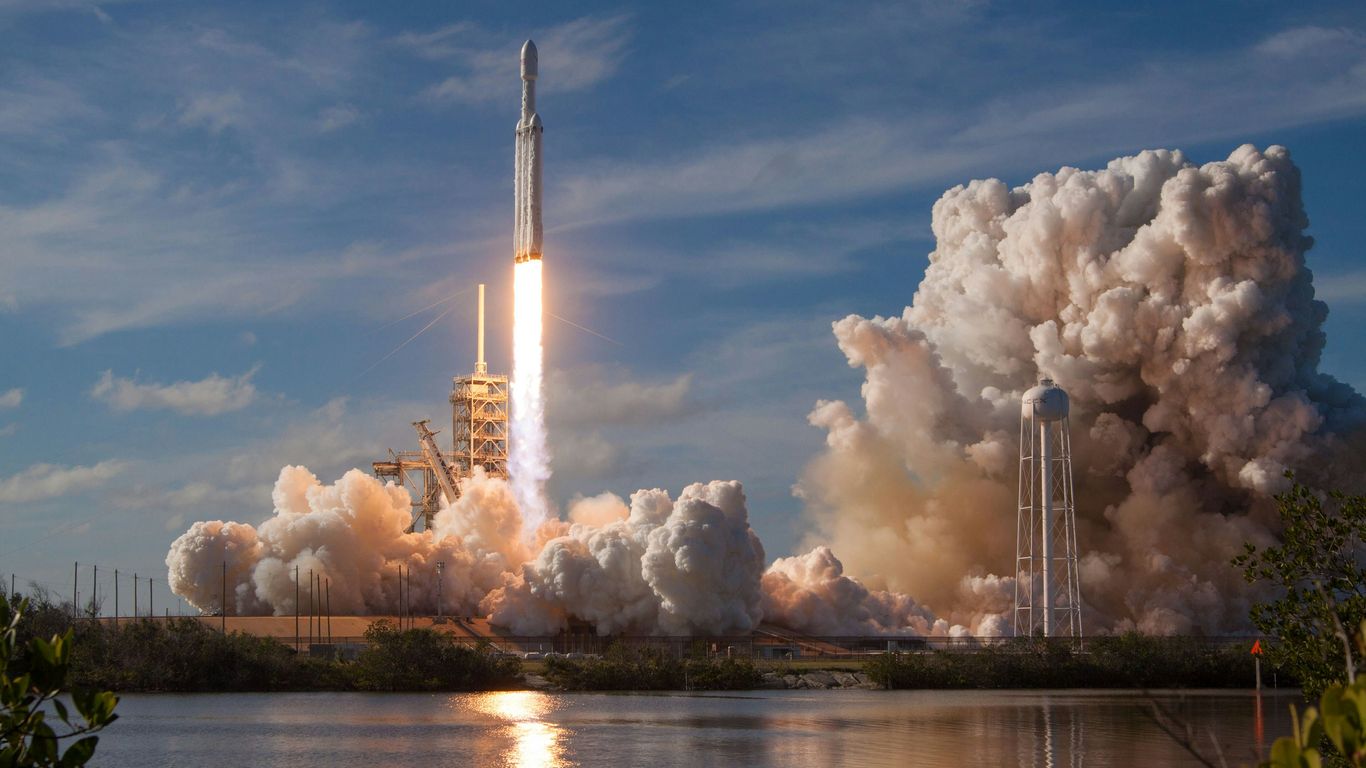
Rocket launching into the dark atmosphere

Effective risk mitigation in space is rarely about pure avoidance; rather, it is about controlling the frequency and severity of inevitable failures. Operators must commit to high-standard loss control protocols that define how they handle anomalies once discovered. By participating in reinsurance networks, insurance companies ensure they have sufficient capacity to cover losses, while operators benefit from the collective wisdom of thousands of previous missions.

Implementing advanced safety systems and loss control protocols

Operators are encouraged to keep their assets optimized through proactive measures. To maintain operational safety, companies generally follow these essential strategies:

  • Adopting industry-standard protocols for redundant power and data systems.
  • Conducting rigorous software-in-the-loop testing before finalizing launch configurations.
  • Establishing permanent, dedicated teams for rapid anomaly response.
  • Regular updates to collision avoidance software based on current debris telemetry.

These actions serve as a core requirement for keeping space ventures insurable in a competitive insurance landscape.

Managing orbital debris and collision avoidance requirements

Collisions with orbiting debris represent a substantial systemic risk that requires active management from the satellite operator. Insurers often mandate participation in collaborative tracking networks that provide data on potential conjunctions. Failing to maintain these requirements can often lead to significantly increased premiums or the loss of eligibility for specific excess layers of coverage.

Collaborative risk transfer through reinsurance networks

Most insurance providers limit their direct exposure on any single satellite to ensure diversity in their risk pool. Reinsurance acts as the secondary layer that absorbs the volatility in the event of a total mission failure. This creates a stable environment, as reinsurance capacity allows primary insurers to focus on pricing and servicing the client directly.

Periodic operational audits for long-duration space assets

For satellites intended to stay in orbit for over a decade, periodic audits ensure that the hardware isn’t aging faster than the original actuarial projections. Insurers use these checks to determine if the mission intent has shifted or if the asset requires additional monitoring. Proper audits effectively turn the annual premium payment into a process that supports long-term viability.

Liability and Regulatory Frameworks in Space

Navigating the legal landscape of space requires an understanding that individual operators are often bound by the regulations of their home nations. International treaties establish that countries are ultimately responsible for the damages caused by objects launched from their territory. Private firms, therefore, enter into complex legal arrangements to allocate this liability to the entity best suited to absorb the cost of a catastrophic impact event.

Navigating international treaties and national licensing obligations

Most space operations are governed by a combination of domestic licensing, such as FAA requirements for launch, and international treaty obligations. These frameworks demand that private space companies maintain specific insurance limits to protect against third-party damage to ground property or aircraft. These compliance regimes ensure that the financial impact of a failure stays within the commercial sector rather than falling to taxpayers.

Assessing third-party liability for ground and atmospheric impacts

Ground liability remains a primary concern because the kinetic energy of a falling object can cause substantial damage in populated areas. Policies are engineered to include defense costs and indemnity payments, which are paramount during litigation. Assessing these risks requires looking at atmospheric re-entry profiles, which are calculated to ensure public safety is baked into the regulatory structure.

Compliance standards for spaceborne data security

The security of data flowing from a satellite is as important as the physical health of the craft in modern commercial contracts. Inadequate cybersecurity protocols can lead to control loss, which is increasingly categorized as an insurable loss if the breach results from a covered peril. Operators must document their data security standards to avoid exclusions that might otherwise apply in the event of a malicious system compromise.

Allocation of liability in public-private space partnerships

In missions where government agencies and private businesses partner, the allocation of liability must be explicitly delineated. Often, these parties utilize cross-waivers of liability, which prevent lawsuits between partners and ensure that each party is responsible only for its specific scope of the mission. This clear allocation reduces the potential for unpredictable litigation following a mission failure.

Claims Processes and Dispute Resolution for Satellite Assets

When a loss does occur, the claims process follows a rigid, formal structure to ensure consistency and speed of settlement. Because high-velocity environments make physical recovery impossible, investigators must rely on telemetry and simulated failure models to prove the cause of loss. This evidentiary challenge makes the initial notification period the most critical phase for both the insured and the insurer.

Notification protocols and remote diagnostic investigation

Notification triggers a series of legal actions, including the formal preservation of mission data. Insurers demand remote diagnostics to pinpoint the precise time of the failure, which is crucial for determining if the loss happened during a covered period. Quick, accurate reporting preserves the insurer’s right to assess damage and investigate the validity of the underlying cause.

Causation analysis in high-velocity space environment failures

Causation analysis in space requires separating internal electronic failure from external impact. Engineers must often recreate the event in a non-orbital lab to distinguish between genuine hardware defects and unpredictable orbital environmental factors. This distinction is the bedrock of coverage disputes when an operator claims a covered loss and the insurer suspects mechanical fatigue that might be excluded by policy language.

Valuation challenges in fragmented or total-loss scenarios

Even when the satellite is declared a total loss, the insurance payout must factor in salvage components or remaining mission life. Where fragmented loss occurs, adjusters must determine the percentage of operational capability remaining vs. the value lost. These nuances mean that the settlement process is usually a result of rigorous negotiation based on historical usage and current performance metrics.

Utilizing arbitration to resolve technical and contractual conflicts

Because traditional courts often lack a deep understanding of space-specific engineering, many contracts mandate mandatory arbitration. Arbitrators with expertise in aerospace engineering provide rulings that are both legally sound and practically informed. This reliance on technical arbitration serves to expedite the financial conclusion of a claim, minimizing time spent in uncertainty for the operator.

Conclusion

Space commercialization insurance systems provide the financial bedrock necessary to advance human activity into the final frontier through rigorous risk pooling and clear legal accountability. By integrating sophisticated data models with practical policy language, the industry ensures that missions reach their goals and the overall space economy continues to grow at a sustainable pace. As technologies like robotics and satellite manufacturing continue to mature, the partnerships between engineering teams, underwriters, and insurers will remain a critical element in protecting the complex investments that define the current era of space discovery.

Frequently Asked Questions

What are the main types of space insurance?

The primary types include pre-launch insurance, launch insurance, and in-orbit coverage, each addressing different risk stages from ground assembly to end-of-mission operation.

How is the value of a satellite determined?

Value is typically established using an agreed-value method that estimates the replacement cost of the asset along with associated costs like launch services and insurance premiums.

Do space policies cover business losses?

Many policies can include business interruption coverage to protect the future income streams of a satellite operation, provided the loss stems from a physical failure during the coverage period.

What happens if a satellite crashes into another object?

Policies often cover third-party liability and physical asset loss, subject to the conditions of the policy and whether the operator adhered to collision avoidance protocols.

Why does space insurance use arbitration?

Arbitration allows parties to use expert aerospace engineers who understand the technical nature of orbital failures, making it faster and more predictable than traditional court proceedings.

Is space debris covered by standard policies?

Collision with space debris is generally considered a covered peril, provided the operator has taken reasonable steps to manage collision avoidance as required by the policy.

How does inflation affect space insurance premiums?

Premiums typically track with the replacement costs of the satellites, which are sensitive to shifts in the manufacturing, launch market, and raw material costs over time.

Insurance Systems for Space Commercialization


Key Takeaways

Space commercialization requires sophisticated insurance systems that manage risk from the drawing board to the final de-orbiting phase. These financial structures ensure that private and public missions can proceed with the economic stability needed to sustain long-term orbital projects.

  • Precise underwriting separates launch-phase perils from ongoing in-orbit operational risks.
  • Insurance functions as an engineered system for transferring catastrophic financial liability.
  • Coverage triggers are increasingly tied to remote diagnostic findings and sensor data.
  • Dispute resolution often relies on specialized technical arbitration rather than traditional court litigation.
  • Effective risk management requires balancing physical asset valuation with future revenue loss projections.

The Foundations of Space Insurance and Risk Identification

The expansion of the global space industry depends on a robust framework that recognizes the unique volatility of vacuum-based environments. When organizations plan to place assets into orbit, they must identify every factor that could disrupt the mission, ranging from mechanical failure to external debris impact. By systematically mapping these threats, stakeholders create a baseline for insurance contracts designed to cover the most severe outcomes.

Defining insurable risks in extraterrestrial environments

Insurable risks in space differ significantly from traditional terrestial insurance because of the extreme physical constraints and the near-impossibility of onsite inspections. Every mission payload must be assessed against unique environmental stressors like thermal cycling, radiation, and vacuum impacts during launch and deployment. Unlike standard property insurance, these policies focus heavily on functional milestones rather than just physical structure preservation.

The economic role of space insurance infrastructure

Insurance serves as a silent partner in the advancement of modern satellite connectivity and exploration. By providing a safety net for massive financial outlays, it enables commercial programs to secure the funding necessary for high-risk innovation. This infrastructure effectively spreads the economic burden of space failure across a broad pool of global capital, preventing individual mission failures from bankrupting emerging ventures.

Classification of launch and in-orbit perils

Perils in space are classified by their temporal proximity to key mission events, primarily focusing on launch vehicle separation and subsequent orbital insertion. While launch risks represent a concentrated intensity of volatility, in-orbit risks involve longer-term deterioration or collision events that occur over months or years. Understanding these classifications allows underwriters to build risk management models that reflect the actual life cycle of the satellite fleet.

Distinguishing pure risk from speculative space ventures

Commercial space operators must clearly separate predictable physical failure from speculative business outcomes. Insurance strictly covers fortuitous, accidental losses rather than market failure or the failure to achieve business targets like specific data throughput speeds. Maintaining this distinction ensures that insurance systems remain sustainable while supporting the legitimate needs of the growing space economy.

Policy Structures for Commercial Space Operations

Satellite orbiting in stable space environment

Commercial missions require flexible policy structures that align with the specific phases of a satellite’s operational lifetime. These programs are not static, as they must adjust to cover everything from ground assembly and transportation to the final maneuvering in deep space. Policymakers and operators use sophisticated, layered approaches to ensure that coverage triggers are clearly defined versus ambiguous, reducing the chance for protracted claims disputes during critical operational pauses.

Components of launch off-nominal condition policies

Off-nominal conditions refer to any scenario where the launch vehicle or orbital injection doesn’t proceed exactly as planned, whether or not the mission is completely lost. These policies define specific performance metrics, such as orbital altitude or velocity requirements, that dictate a payout. Establishing these benchmarks requires tight integration between launch providers and actuarial teams.

Coverage triggers for satellite in-orbit failure

Once a unit reaches its intended position, coverage shifts to triggers based on the failure of specific subsystems to operate as intended. Modern policy language increasingly incorporates remote diagnostic data as primary evidence, moving away from archaic forms of physical verification. This shift ensures that if a sensor reports catastrophic loss, the trigger is activated without need for external visual confirmation.

Valuing physical assets and revenue loss in space programs

Valuation is perhaps the most difficult part of policy design because it involves calculating costs for replacement that may not exist in a standardized market. Compensation often follows an agreed-value structure, which pre-defines the payout upon total loss. The following table illustrates how different components contribute to the total insured value in a typical commercial mission.

Value Component Description Integration Method
Hardware Replacement Cost to build a new unit Direct replacement value
Launch Integration Rocket manifest and launch fees Cost-plus pricing model
Business Interruption Projected loss of revenue Projected usage duration

This framework ensures that all parties understand the precise financial responsibility before the launch even commences.

Integrating business interruption coverage for commercial missions

Business interruption coverage plays a specialized role because it links the physical failure of an asset to the resulting stream of revenue intended to flow from it. For commercial missions, this often includes multi-year projections that must be carefully audited during underwriting. It is a vital economic tool for companies reliant on continuous data or telecommunications uptime.

Underwriting and Actuarial Modeling for Space Risks

Actuarial models for space must be inherently dynamic, processing vast amounts of data ranging from debris density maps to the historical failure rates of specific rocket engines. Underwriters seek to balance the inherent volatility of spaceflight with granular data points that narrow the focus of unknown outcomes. They prioritize hardware maturity levels and the proven track record of launch operators to ensure the portfolio remains stable despite high-complexity risk profiles.

Leveraging scientific data in actuarial loss forecasting

Actuaries rely on complex predictive models that simulate orbital mechanics to estimate the frequency of collision events. By integrating atmospheric and orbital data, they refine premiums to reflect the specific hazards of a chosen trajectory. High-quality data prevents adverse selection within the risk pool, ensuring that lower-risk operators aren’t disproportionately subsidizing those with questionable technical oversight.

Evaluating technical maturity and mission reliability metrics

Reliability engineering dictates that mission success is tied to hardware heritage, where proven designs always attract more favorable terms. If a satellite platform has high-flight heritage, insurers perceive a lower risk of unexpected electronic or mechanical failure. This assessment is central to risk classification since it allows for more accurate adjustments to the policy premium and deductible levels.

Mitigating adverse selection in high-complexity portfolios

Managing portfolios with varied technological backgrounds requires rigid vetting processes that verify a company’s operational capability. Insurers often require transparency into internal testing protocols before agreeing to coverage, ensuring the operator manages its assets according to best-in-class standards. This practice discourages companies from seeking cheap coverage for poorly maintained or experimental, untested satellite designs.

Adjusting premiums based on specific orbital trajectories and launch environments

Premiums fluctuate based on the specific path the launch vehicle takes, as certain orbits hold higher debris concentrations than others. Launching into highly congested low-Earth orbits carries different insurance requirements than launching into geostationary slots. Underwriters use these trajectory-based metrics to accurately size the risk for each project, keeping the overarching commercial space insurance market solvent.

Launch and In-Orbit Risk Mitigation Strategies

Rocket launching into the dark atmosphere

Effective risk mitigation in space is rarely about pure avoidance; rather, it is about controlling the frequency and severity of inevitable failures. Operators must commit to high-standard loss control protocols that define how they handle anomalies once discovered. By participating in reinsurance networks, insurance companies ensure they have sufficient capacity to cover losses, while operators benefit from the collective wisdom of thousands of previous missions.

Implementing advanced safety systems and loss control protocols

Operators are encouraged to keep their assets optimized through proactive measures. To maintain operational safety, companies generally follow these essential strategies:

  • Adopting industry-standard protocols for redundant power and data systems.
  • Conducting rigorous software-in-the-loop testing before finalizing launch configurations.
  • Establishing permanent, dedicated teams for rapid anomaly response.
  • Regular updates to collision avoidance software based on current debris telemetry.

These actions serve as a core requirement for keeping space ventures insurable in a competitive insurance landscape.

Managing orbital debris and collision avoidance requirements

Collisions with orbiting debris represent a substantial systemic risk that requires active management from the satellite operator. Insurers often mandate participation in collaborative tracking networks that provide data on potential conjunctions. Failing to maintain these requirements can often lead to significantly increased premiums or the loss of eligibility for specific excess layers of coverage.

Collaborative risk transfer through reinsurance networks

Most insurance providers limit their direct exposure on any single satellite to ensure diversity in their risk pool. Reinsurance acts as the secondary layer that absorbs the volatility in the event of a total mission failure. This creates a stable environment, as reinsurance capacity allows primary insurers to focus on pricing and servicing the client directly.

Periodic operational audits for long-duration space assets

For satellites intended to stay in orbit for over a decade, periodic audits ensure that the hardware isn’t aging faster than the original actuarial projections. Insurers use these checks to determine if the mission intent has shifted or if the asset requires additional monitoring. Proper audits effectively turn the annual premium payment into a process that supports long-term viability.

Liability and Regulatory Frameworks in Space

Navigating the legal landscape of space requires an understanding that individual operators are often bound by the regulations of their home nations. International treaties establish that countries are ultimately responsible for the damages caused by objects launched from their territory. Private firms, therefore, enter into complex legal arrangements to allocate this liability to the entity best suited to absorb the cost of a catastrophic impact event.

Navigating international treaties and national licensing obligations

Most space operations are governed by a combination of domestic licensing, such as FAA requirements for launch, and international treaty obligations. These frameworks demand that private space companies maintain specific insurance limits to protect against third-party damage to ground property or aircraft. These compliance regimes ensure that the financial impact of a failure stays within the commercial sector rather than falling to taxpayers.

Assessing third-party liability for ground and atmospheric impacts

Ground liability remains a primary concern because the kinetic energy of a falling object can cause substantial damage in populated areas. Policies are engineered to include defense costs and indemnity payments, which are paramount during litigation. Assessing these risks requires looking at atmospheric re-entry profiles, which are calculated to ensure public safety is baked into the regulatory structure.

Compliance standards for spaceborne data security

The security of data flowing from a satellite is as important as the physical health of the craft in modern commercial contracts. Inadequate cybersecurity protocols can lead to control loss, which is increasingly categorized as an insurable loss if the breach results from a covered peril. Operators must document their data security standards to avoid exclusions that might otherwise apply in the event of a malicious system compromise.

Allocation of liability in public-private space partnerships

In missions where government agencies and private businesses partner, the allocation of liability must be explicitly delineated. Often, these parties utilize cross-waivers of liability, which prevent lawsuits between partners and ensure that each party is responsible only for its specific scope of the mission. This clear allocation reduces the potential for unpredictable litigation following a mission failure.

Claims Processes and Dispute Resolution for Satellite Assets

When a loss does occur, the claims process follows a rigid, formal structure to ensure consistency and speed of settlement. Because high-velocity environments make physical recovery impossible, investigators must rely on telemetry and simulated failure models to prove the cause of loss. This evidentiary challenge makes the initial notification period the most critical phase for both the insured and the insurer.

Notification protocols and remote diagnostic investigation

Notification triggers a series of legal actions, including the formal preservation of mission data. Insurers demand remote diagnostics to pinpoint the precise time of the failure, which is crucial for determining if the loss happened during a covered period. Quick, accurate reporting preserves the insurer’s right to assess damage and investigate the validity of the underlying cause.

Causation analysis in high-velocity space environment failures

Causation analysis in space requires separating internal electronic failure from external impact. Engineers must often recreate the event in a non-orbital lab to distinguish between genuine hardware defects and unpredictable orbital environmental factors. This distinction is the bedrock of coverage disputes when an operator claims a covered loss and the insurer suspects mechanical fatigue that might be excluded by policy language.

Valuation challenges in fragmented or total-loss scenarios

Even when the satellite is declared a total loss, the insurance payout must factor in salvage components or remaining mission life. Where fragmented loss occurs, adjusters must determine the percentage of operational capability remaining vs. the value lost. These nuances mean that the settlement process is usually a result of rigorous negotiation based on historical usage and current performance metrics.

Utilizing arbitration to resolve technical and contractual conflicts

Because traditional courts often lack a deep understanding of space-specific engineering, many contracts mandate mandatory arbitration. Arbitrators with expertise in aerospace engineering provide rulings that are both legally sound and practically informed. This reliance on technical arbitration serves to expedite the financial conclusion of a claim, minimizing time spent in uncertainty for the operator.

Conclusion

Space commercialization insurance systems provide the financial bedrock necessary to advance human activity into the final frontier through rigorous risk pooling and clear legal accountability. By integrating sophisticated data models with practical policy language, the industry ensures that missions reach their goals and the overall space economy continues to grow at a sustainable pace. As technologies like robotics and satellite manufacturing continue to mature, the partnerships between engineering teams, underwriters, and insurers will remain a critical element in protecting the complex investments that define the current era of space discovery.

Frequently Asked Questions

What are the main types of space insurance?

The primary types include pre-launch insurance, launch insurance, and in-orbit coverage, each addressing different risk stages from ground assembly to end-of-mission operation.

How is the value of a satellite determined?

Value is typically established using an agreed-value method that estimates the replacement cost of the asset along with associated costs like launch services and insurance premiums.

Do space policies cover business losses?

Many policies can include business interruption coverage to protect the future income streams of a satellite operation, provided the loss stems from a physical failure during the coverage period.

What happens if a satellite crashes into another object?

Policies often cover third-party liability and physical asset loss, subject to the conditions of the policy and whether the operator adhered to collision avoidance protocols.

Why does space insurance use arbitration?

Arbitration allows parties to use expert aerospace engineers who understand the technical nature of orbital failures, making it faster and more predictable than traditional court proceedings.

Is space debris covered by standard policies?

Collision with space debris is generally considered a covered peril, provided the operator has taken reasonable steps to manage collision avoidance as required by the policy.

How does inflation affect space insurance premiums?

Premiums typically track with the replacement costs of the satellites, which are sensitive to shifts in the manufacturing, launch market, and raw material costs over time.

Recent Posts