

When you get insurance, it’s all about what could go wrong, right? These ‘what ifs’ are what insurers call perils. Understanding what a peril is, and what kind of perils your policy actually covers, is super important. It’s not always straightforward, and knowing the difference between what’s covered and what’s not can save you a lot of headaches later on. We’ll break down the basics of insurance perils so you can get a clearer picture of your protection.
Key Takeaways
- An insurance peril is the specific cause of a loss that your policy covers, like fire or theft.
- Policies can be ‘named perils’ (only covering listed events) or ‘open perils’ (covering everything not excluded).
- Exclusions are events or conditions that your policy specifically does not cover, even if a peril occurs.
- The type of peril covered significantly impacts how your policy is structured and what you can claim.
- Understanding perils is vital for accurate pricing, the claims process, and managing your overall risk.
Understanding Insurance Perils
Defining Perils in Insurance
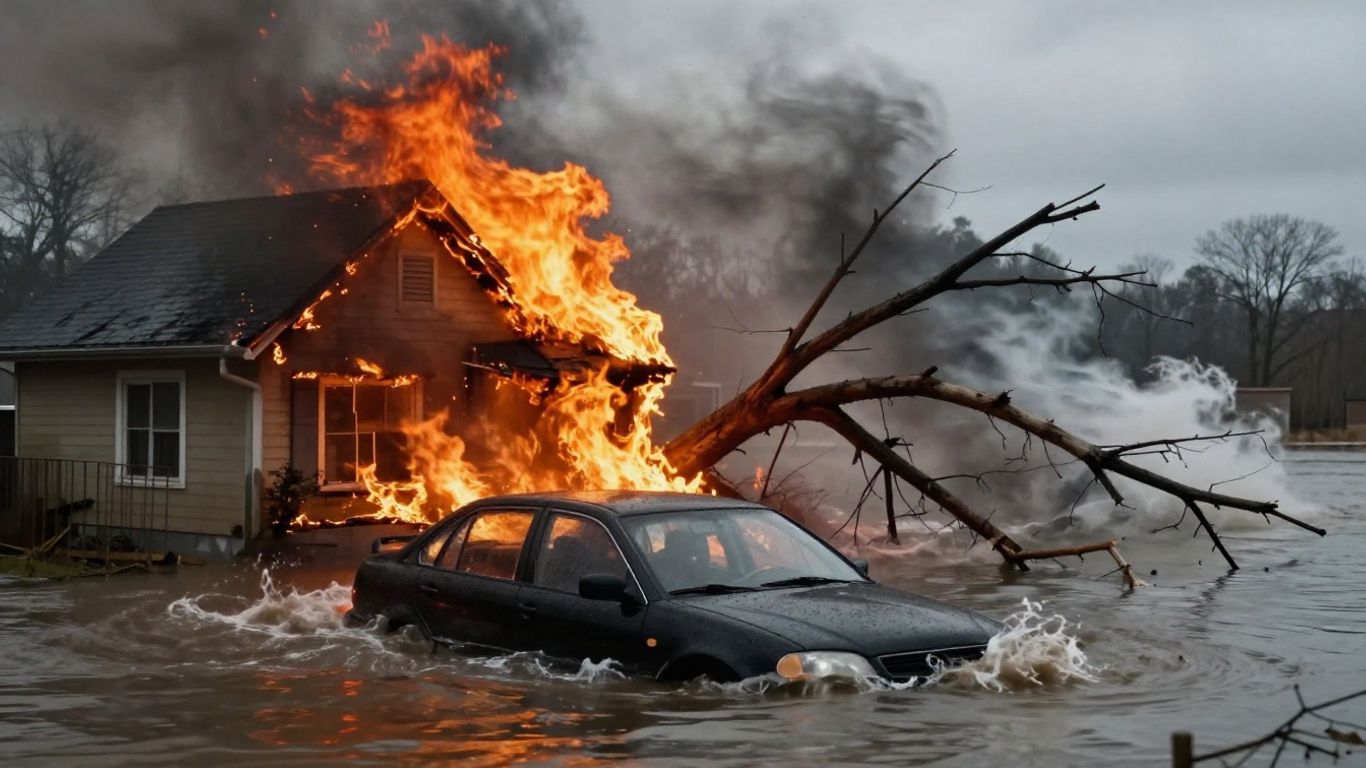
When we talk about insurance, a "peril" is basically the cause of a loss. It’s the specific event that leads to damage or injury, and it’s what your insurance policy is designed to protect you against. Think of it as the ‘what’ that went wrong. For example, a fire is a peril, a car crash is a peril, or a theft is a peril. Without a covered peril, there’s usually no claim to be made. The whole point of having insurance is to transfer the financial risk of these specific events from yourself to the insurance company.
Distinguishing Perils from Hazards
It’s easy to mix up perils and hazards, but they’re different. A peril is the cause of the loss, like the fire itself. A hazard, on the other hand, is something that increases the chance or the severity of a loss. So, if you have a pile of oily rags in your garage, that’s a physical hazard that makes a fire (the peril) more likely. Other hazards include things like faulty wiring (physical hazard), or maybe someone being a bit careless with their property because they know it’s insured (morale hazard). Insurers look at both perils and hazards when they decide whether to offer coverage and how much to charge.
The Role of Perils in Coverage
How perils are handled is a big deal in your insurance policy. It shapes what you’re actually covered for. There are two main ways policies deal with perils:
- Named Perils Coverage: This type of policy only covers losses caused by the specific perils listed in the contract. If the cause of your loss isn’t on that list, you’re generally not covered. It’s like a "what’s on this menu" approach.
- Open Perils Coverage (or All-Risk): This is broader. It covers losses from any peril unless it’s specifically excluded in the policy. It’s usually more expensive but offers wider protection. Think of it as "everything is covered unless we say it isn’t."
Understanding which perils are covered and which are excluded is absolutely key to knowing what your insurance policy will actually do for you when something goes wrong. It’s not just about the big, obvious events; it’s about the precise wording that defines your protection.
Types of Covered Perils
When you’re looking at insurance, understanding what kind of events, or "perils," are actually covered is a big deal. It’s not just about having a policy; it’s about knowing what that policy will do for you when something goes wrong. Policies generally fall into two main categories when it comes to naming the perils they cover: Named Perils and Open Perils.
Named Perils Coverage Explained
This type of policy is pretty straightforward. It lists out the specific perils that are covered. If the damage to your property or the loss you experience is caused by one of these listed perils, your insurance will likely pay out, minus your deductible, of course. But here’s the catch: if the cause of loss isn’t on that list, you’re probably on your own. It’s like having a specific shopping list – if it’s not on the list, you don’t get it.
Commonly named perils in property insurance often include things like:
- Fire or lightning
- Windstorm or hail
- Explosion
- Riot or civil commotion
- Aircraft
- Vehicles
- Smoke
- Vandalism or malicious mischief
- Theft
- Falling objects
- Weight of ice, snow, or sleet
- Water damage (from accidental discharge or overflow)
- Freezing
- Sudden and accidental tearing apart, cracking, burning, or bulging (of steam or hot water systems)
Open Perils Coverage Explained
Open Perils coverage, sometimes called "all-risk" coverage (though that’s a bit of a misnomer because there are always exclusions), works the opposite way. Instead of listing what is covered, it lists what isn’t. This means your insurance covers damage from any peril unless it’s specifically excluded in the policy. It generally offers broader protection than Named Perils coverage. So, if a peril isn’t on the exclusion list, and it causes a loss, it’s typically covered.
Common exclusions in Open Perils policies might include:
- Flood
- Earthquake
- War
- Nuclear hazard
- Intentional acts
- Wear and tear
- Pest infestation
It’s really important to read your policy documents carefully to see exactly which perils are named or excluded. What’s covered in one policy might be excluded in another, even if they seem similar.
Specific Peril Examples in Policies
Let’s say you have a homeowners policy. If a tree falls on your house, that’s usually covered under both Named Perils (if "falling objects" is listed) and Open Perils (as it’s unlikely to be excluded). But what about a burst pipe? If it’s due to freezing, it might be covered. If it’s due to old age and corrosion, it might not be. Or consider a kitchen fire. That’s almost always a covered peril. However, if the fire was intentionally set by the homeowner, that would be an exclusion.
The distinction between Named Perils and Open Perils coverage significantly impacts the scope of protection. While Named Perils policies offer clarity on covered events, they can leave policyholders exposed to unlisted risks. Open Perils policies provide a wider safety net, but a thorough review of exclusions is paramount to avoid unexpected gaps in coverage.
Understanding these differences helps you choose the right policy for your needs and know what to expect if you ever have to file a claim.
Exclusions and Limitations on Perils
How Exclusions Function
Think of insurance policies like a contract that spells out exactly what’s covered and, just as importantly, what’s not. Exclusions are basically the ‘not covered’ sections. They’re there to keep policies focused on specific risks and to prevent insurers from having to pay for things that are just too unpredictable or outside the scope of what the policy was designed for. For instance, a standard home insurance policy might cover fire damage, but it will likely exclude damage from a flood or an earthquake. These aren’t usually covered because they’re massive, widespread events that require specialized insurance. Exclusions help manage the insurer’s exposure and keep premiums more affordable for everyone by removing highly improbable or catastrophic risks from the general pool.
Endorsements Modifying Peril Coverage
Sometimes, the standard exclusions in a policy just don’t fit your specific needs. That’s where endorsements come in. An endorsement is like an amendment or an add-on to your existing policy. It can be used to add coverage for a peril that’s normally excluded, or sometimes, it can even restrict coverage further. For example, if you live in an area prone to earthquakes, you might get an endorsement to add earthquake coverage to your homeowner’s policy, which would otherwise exclude it. Conversely, an endorsement might be used to clarify that certain types of damage, even if caused by a covered peril, are still not covered. It’s all about tailoring the policy to your unique situation.
Understanding Policy Limitations
Beyond outright exclusions, policies also have limitations that cap how much the insurer will pay out. These limitations can apply to the total amount of coverage (the policy limit) or to specific types of losses or property. For example, a homeowner’s policy might have a sub-limit for jewelry or firearms, meaning it won’t cover the full value of those items if they’re stolen, even if the overall policy limit is much higher. There are also deductibles, which are the amounts you have to pay out-of-pocket before the insurance kicks in. These limitations are designed to share the risk between you and the insurer and to prevent claims for very small amounts.
Here’s a quick look at common limitations:
- Policy Limits: The maximum amount the insurer will pay for a covered loss.
- Sub-limits: Specific lower limits for certain types of property (e.g., jewelry, art) or certain types of perils.
- Deductibles: The amount you pay before the insurer pays.
- Waiting Periods: Some policies may have a period after purchase before certain coverages become active.
It’s really important to read your policy documents carefully. The language can sometimes be a bit dense, but understanding what’s excluded and what the limits are is key to knowing what you’re actually protected against when something goes wrong. Don’t just assume; check the details.
The Impact of Perils on Policy Structure
The Insuring Agreement’s Role
The insuring agreement is the heart of any insurance policy. It’s where the insurer makes its promise to pay for losses. This section clearly lays out what kind of events, or perils, are covered. Think of it as the main contract. If a peril isn’t mentioned here, or if it’s specifically excluded later on, the insurer generally won’t cover it. For example, a standard homeowner’s policy might list fire, windstorm, and theft as covered perils in the insuring agreement. If your house burns down, this is the part of the policy that says the insurance company will step in to help.
Declarations Page and Peril Identification
The declarations page, often called the "dec page," is like the policy’s summary sheet. It’s usually the first page you see and it personalizes the policy for you. It lists key details like your name, the property address, the policy period, the amount of coverage (limits), and importantly, the premium you pay. It also often specifies the type of coverage you have regarding perils. For instance, it might state "Open Perils" or "Named Perils" for your dwelling coverage. This page acts as a quick reference to understand the basic framework of your coverage and how perils are addressed within it.
Conditions Affecting Peril Coverage
Conditions are the rules of the road for your insurance policy. They aren’t about what perils are covered, but rather what you and the insurer must do for coverage to apply or remain valid. These can significantly impact whether a claim related to a specific peril will be paid. For example, a condition might require you to report a loss within a certain number of days after it happens. Another common condition is the "cooperation clause," which means you have to help the insurer investigate a claim. If you don’t meet these conditions, the insurer might deny your claim, even if the peril itself was covered. It’s like having a covered peril, but failing to follow the policy’s instructions when a loss occurs.
- Reporting Requirements: You must notify the insurer of a loss promptly.
- Cooperation: You need to assist the insurer in their investigation.
- Preservation of Property: You may be required to take steps to prevent further damage after a loss.
- Subrogation: The insurer may have the right to pursue a third party responsible for the loss.
Understanding the interplay between the insuring agreement, the declarations page, and the conditions is vital. It’s not just about knowing if a peril is listed; it’s about understanding the specific terms and obligations that govern how and when that coverage will respond.
Perils in Property Insurance
Common Property Perils
When we talk about property insurance, we’re really looking at what kinds of bad things could happen to your stuff – your house, your car, your business building, you name it. These ‘bad things’ are what insurers call perils. Think of them as the direct causes of damage or loss. It’s not just about the damage itself, but the event that triggered it. For instance, a fire is a peril, and the resulting damage to your home is the loss. Similarly, a severe storm is a peril, and the broken windows and roof damage are the losses.
Here are some of the most common perils that property insurance policies are designed to cover:
- Fire and Smoke: This is a classic one. Accidental fires, whether from faulty wiring or a cooking mishap, can cause extensive damage. Smoke damage, even without a full fire, is also often covered.
- Windstorms and Hail: Think hurricanes, tornadoes, or even just strong thunderstorms. These can rip off roofs, break windows, and cause significant damage to both structures and vehicles.
- Theft and Vandalism: When someone breaks in and steals your belongings or intentionally damages your property, that’s a covered peril.
- Explosions: This could be anything from a gas explosion to a lightning strike causing an explosion.
- Riot or Civil Commotion: Damage caused during periods of widespread public unrest.
- Falling Objects: This usually refers to things like trees falling onto your property due to wind or rot.
- Water Damage: This is a bit more nuanced. Damage from sudden and accidental sources like a burst pipe or overflowing appliance is typically covered. However, gradual damage from leaks or flooding is often excluded or requires separate coverage.
It’s really important to remember that not all policies cover all these perils equally. Some policies might be ‘named perils,’ meaning they only cover the specific events listed. Others are ‘open perils’ or ‘all-risk,’ which cover everything except what’s specifically excluded. Always check your policy details.
Understanding the specific perils listed in your policy is key. It’s the difference between having coverage when you need it and facing a significant financial hit because the event wasn’t listed as a covered cause of loss.
Perils Affecting Dwellings and Structures
When it comes to your home, the perils we just discussed can have a big impact. Homeowners insurance is designed to protect the physical structure of your dwelling – the house itself – as well as other structures on your property, like garages, sheds, or fences. The types of perils that most commonly affect homes include:
- Fire: A house fire can be devastating, destroying the structure and everything inside.
- Wind and Hail: These are major culprits for roof damage, siding damage, and broken windows, especially in areas prone to severe weather.
- Lightning: Can cause fires or direct electrical damage to appliances and the home’s electrical system.
- Weight of Ice, Snow, or Sleet: Heavy accumulations can cause roofs to collapse.
- Accidental Discharge of Water or Steam: Think burst pipes in the winter or a malfunctioning water heater.
- Freezing: Can cause pipes to burst, leading to water damage.
Policies for dwellings often have specific limits for certain types of damage. For example, there might be a sub-limit for damage caused by mold or for detached structures. It’s also where you’ll often see exclusions for things like flood or earthquake damage, which typically require separate insurance policies.
Business Property Perils
Businesses face many of the same perils as homeowners, but often on a larger scale and with additional considerations. Commercial property insurance protects buildings owned by a business, as well as the contents within – think equipment, inventory, furniture, and fixtures. The perils can be quite varied:
- Fire: A fire in a warehouse or retail store can lead to massive losses of inventory and damage to the building.
- Vandalism and Malicious Mischief: Businesses can be targets for intentional damage, especially in urban areas or during times of unrest.
- Windstorms: Damage to a commercial building’s roof or exterior can disrupt operations significantly.
- Theft: Burglary of valuable inventory or equipment is a common concern.
- Business Interruption: While not a direct peril to property, events like a fire or storm that force a business to close can lead to a loss of income. Business interruption insurance is often added to property policies to cover this.
Commercial policies can be quite complex. They might cover things like "improvements and betterments" – modifications a business tenant makes to a leased space. The value of business property is often much higher than personal property, so coverage limits and deductibles are critical. Insurers will look closely at the type of business, its location, and its past loss history when determining coverage and premiums for commercial property.
Perils in Liability Insurance
Liability insurance is all about protecting you when someone else claims you’re responsible for their injuries or damage to their property. It’s not just about physical harm, though. Think about it: if your actions, or even your inaction, lead to someone else getting hurt or their stuff getting broken, you could end up in a lawsuit. That’s where liability insurance steps in, covering the costs associated with defending yourself and any damages you might have to pay.
Liability for Bodily Injury Perils
This is probably the most common type of liability peril people think of. It covers situations where someone gets physically injured because of something you did or failed to do. For example, if a customer slips and falls in your store due to a wet floor you didn’t mark, or if a guest at your home trips over a loose step. The peril here is the accident itself that leads to the injury. The insurance would help pay for their medical bills, lost wages if they can’t work, and pain and suffering.
Perils Leading to Property Damage Claims
This type of peril involves damage to someone else’s property. Imagine you’re driving and accidentally hit another car, or maybe a tree from your yard falls onto your neighbor’s garage during a storm. The peril is the event that causes the damage – the collision, the falling tree. Your liability insurance would cover the cost to repair or replace the damaged property. For businesses, this could also include damage caused by their products or services after they’ve been delivered.
Professional Liability Perils
This is a bit different. Professional liability, often called Errors & Omissions (E&O) insurance, deals with mistakes made in the course of providing professional services. It’s not about causing physical harm or property damage, but rather financial loss to a client due to negligence, errors, or failure to perform professional duties. Think of an architect who makes a design flaw that costs a client a lot of money to fix, or a consultant who gives bad advice that leads to financial losses. The peril here is the professional error or omission itself. These policies are usually written on a ‘claims-made’ basis, meaning the claim has to be filed during the policy period for coverage to apply.
Specialty Insurance Perils
Beyond the common risks like fire or theft, there’s a whole category of specialized perils that require specific insurance policies. These aren’t your everyday occurrences, but when they happen, they can be incredibly disruptive and costly. Think about the unique challenges businesses and individuals face in today’s complex world.
Cyber Incident Perils
Cyber incidents are a big one these days. We’re talking about data breaches, ransomware attacks, and system failures caused by hackers or even just human error. These events can lead to significant financial losses from:
- The cost of notifying affected customers.
- Restoring compromised data and systems.
- Legal fees and regulatory fines.
- Lost business income while systems are down.
Cyber insurance is designed to help businesses recover from these digital disasters. It’s a rapidly evolving area because the threats themselves are always changing.
The digital landscape is constantly shifting, and with it, the nature of cyber threats. What was a cutting-edge attack vector last year might be old news today. This means cyber insurance policies need to be flexible and regularly updated to keep pace with these new dangers.
Environmental Liability Perils
This type of insurance deals with pollution and environmental damage. If your business operations cause a spill or release of hazardous materials, you could be on the hook for cleanup costs, third-party property damage, and bodily injury claims. This can include:
- Contamination of soil or groundwater.
- Air pollution incidents.
- Damage to natural resources.
- Legal defense costs related to environmental claims.
Environmental liability policies are often tailored to specific industries, recognizing that different businesses have different potential exposures. It’s not just about big industrial accidents; even smaller businesses can face significant environmental risks.
Product Recall Perils
For manufacturers and distributors, a faulty product can lead to a costly recall. If a product is found to be defective or unsafe, companies might have to pull it from the market. Product recall insurance can help cover the expenses associated with this, such as:
- The cost of notifying the public and regulatory bodies.
- The expense of retrieving and destroying the recalled product.
- The cost of replacing the product or reimbursing customers.
This coverage is vital for companies that put physical goods into the hands of consumers, as the financial fallout from a widespread recall can be immense.
Perils and the Claims Process
Notice of Loss Due to Peril
When something bad happens – a fire, a flood, a car crash – that’s the peril. The very first step after a peril strikes and causes damage is letting your insurance company know. This is called giving notice of loss. It’s super important to do this quickly. Most policies have a deadline for reporting, and if you wait too long, they might say you can’t get paid because you didn’t tell them fast enough. You can usually report a loss by calling them, using their website, or sometimes through your insurance agent. It’s the start of everything, really.
Investigating Peril-Related Claims
Once the insurance company knows about the loss, they’ll start looking into it. This is the investigation phase. They’ll assign someone, usually called an adjuster, to figure out what happened. The adjuster will check your policy to see if the peril that caused the damage is actually covered. They’ll also want to know how bad the damage is. This might involve them coming to your house or business to see the damage themselves, talking to you, and maybe even asking for documents like repair estimates or receipts. The goal is to understand the facts and see if the claim fits what the policy promises to cover.
Claim Denials Based on Excluded Perils
Sometimes, even after an investigation, the insurance company might say they won’t pay the claim. This often happens if the peril that caused the damage isn’t listed as a covered peril in your policy, or if it’s specifically listed as an exclusion. For example, if you have a standard home insurance policy and a flood damages your basement, that’s usually not covered because floods are typically excluded unless you have a separate flood insurance policy. It’s a tough situation, but it comes back to understanding what your policy actually covers before something bad happens.
Here’s a quick look at common reasons for claim denial:
- Excluded Perils: The event causing the loss is specifically listed as not covered (e.g., flood, earthquake, war).
- Lack of Coverage: The peril might be covered, but the specific type of damage or property isn’t.
- Policy Lapses: The policy wasn’t active when the loss occurred due to non-payment of premiums.
- Misrepresentation: Important information was left out or misrepresented when the policy was bought.
- Failure to Meet Conditions: Policyholder didn’t follow certain rules, like not securing property after a previous loss.
It’s easy to think of insurance as a magic safety net, but it’s really a contract. Both you and the insurance company have responsibilities. Understanding the terms, especially what perils are covered and what’s not, is key to a smoother experience if you ever need to make a claim. Don’t wait until disaster strikes to read your policy.
Perils and Insurance Pricing
So, how do insurance companies figure out what to charge you? It all comes down to understanding the risks, or perils, that could lead to a claim. They can’t just pull a number out of thin air; there’s a whole science behind it.
Actuarial Analysis of Peril Frequency
Actuaries are the number crunchers of the insurance world. They look at tons of historical data to figure out how often certain bad things happen. For example, how often do houses in a specific area catch fire? Or how many car accidents occur on a particular type of road? This helps them predict the likelihood of a specific peril occurring. The more frequent a peril is, the more it’s likely to impact your premium.
Severity Analysis of Peril Losses
It’s not just about how often something happens, but also about how much it costs when it does. Severity analysis looks at the average cost of claims for a particular peril. A rare event that causes massive damage (like a major earthquake) might be priced differently than a common event with smaller costs (like minor fender-benders). Insurers need to know if a peril typically results in a small repair bill or a huge payout.
Expected Loss Calculations
Putting frequency and severity together gives you the expected loss. This is basically the average amount an insurer anticipates paying out for a specific peril over a given period. It’s calculated by multiplying the probability of the peril happening by the average cost if it does happen. This expected loss is a major component of the premium you’ll pay. Other factors like operating expenses and profit margins are added on top, but the expected loss from perils is the foundation.
Here’s a simplified look at how it works:
- Frequency: How often does the peril occur?
- Severity: How much does it cost when it occurs?
- Expected Loss: Frequency x Severity
Insurers use these calculations to set rates that are fair for the risk being covered. It’s a balancing act to make sure they have enough money to pay claims while keeping policies affordable for customers. If a peril is very common and expensive, expect the price to reflect that risk.
Mitigating Peril Risks
Even with the best insurance policies, dealing with unexpected events, or perils, can be a real headache. It’s not just about having coverage; it’s about actively managing the risks that could lead to a claim in the first place. Think of it like this: insurance is your safety net, but you still want to avoid falling.
The Role of Deductibles
Deductibles are a pretty standard part of most insurance policies, and for good reason. They’re the amount you agree to pay out-of-pocket before your insurance kicks in. This isn’t just a way for insurers to reduce their payout; it’s a key strategy for managing risk. When you have a financial stake in a loss, you’re naturally more careful. It helps cut down on small, frequent claims that can drive up everyone’s premiums. Plus, choosing a higher deductible can often lower your overall premium, giving you some control over your insurance costs.
Self-Insured Retentions
Similar to deductibles, self-insured retentions (SIRs) are amounts the policyholder agrees to cover themselves. These are more common in commercial insurance. Instead of paying a fixed deductible per claim, a business might have an SIR that applies to a certain type of loss or over a policy period. This approach puts more of the initial financial burden on the insured, encouraging a proactive approach to risk management. It’s a way for businesses to take on a predictable level of risk, often in exchange for more tailored coverage or potentially lower premiums on the remaining risk.
Loss Prevention Strategies
This is where you get to be proactive. Loss prevention is all about taking steps to stop bad things from happening before they even have a chance to occur. It’s the most effective way to deal with perils because it means you don’t have to rely on your insurance at all. For homeowners, this could mean installing smoke detectors, trimming trees near the house, or securing your property against theft. For businesses, it might involve regular equipment maintenance, employee safety training, or implementing cybersecurity measures. The goal is to reduce both the frequency and the severity of potential losses.
Here are some common loss prevention strategies:
- Regular Inspections: Routinely check your property for potential issues like faulty wiring, roof leaks, or structural weaknesses.
- Maintenance Schedules: Keep up with routine maintenance for appliances, vehicles, and machinery to prevent breakdowns.
- Security Measures: Implement physical security like locks and alarms, and digital security like strong passwords and firewalls.
- Emergency Preparedness: Have plans in place for natural disasters or other emergencies, including evacuation routes and communication strategies.
Ultimately, managing perils isn’t just about buying insurance; it’s about adopting a mindset of risk awareness and taking practical steps to protect yourself and your assets. Insurance is a vital tool, but it works best when paired with smart prevention efforts.
Wrapping It Up
So, we’ve talked a lot about what can go wrong with insurance coverage, from not telling the whole truth upfront to how policies are actually written. It’s not just about picking a policy and forgetting about it. You really have to pay attention to the details, like what’s actually covered and what’s not, and make sure you’re being honest when you apply. Because if something happens and the insurer finds out you weren’t upfront, or if the event just isn’t covered by the fine print, you could be left holding the bag. It’s a bit like trying to assemble furniture without reading the instructions – you might end up with something that looks okay, but it’s probably not going to hold up when you need it most. Keeping up with your policy and understanding its limits is key to making sure it actually does what you bought it for.
Frequently Asked Questions
What exactly is a ‘peril’ in insurance terms?
Think of a peril as the specific event that causes damage or loss. It’s the ‘what’ that happened. For example, a fire is a peril, a car crash is a peril, or a thief breaking in is a peril. Insurance policies are designed to cover losses caused by these specific events.
How is a ‘peril’ different from a ‘hazard’?
A peril is the cause of the loss, like a fire. A hazard is something that makes a peril more likely to happen or worse if it does. For instance, leaving oily rags in a garage is a hazard because it increases the chance of a fire (the peril). So, hazards are conditions that can lead to perils.
What’s the difference between ‘named perils’ and ‘open perils’ coverage?
Named perils coverage only protects you from the specific risks listed in your policy, like fire, windstorms, or theft. If the cause of loss isn’t on that list, you’re not covered. Open perils coverage is broader; it protects you from all causes of loss *unless* they are specifically listed as exclusions in your policy.
Can my insurance policy exclude certain perils?
Yes, absolutely. Insurance policies often have exclusions. These are specific perils or situations that the insurance company will *not* cover. Common exclusions might be for floods, earthquakes, or intentional damage. It’s super important to read your policy to know what’s excluded.
How do perils affect the cost of my insurance?
The types of perils your insurance covers, and how likely they are to happen in your area, directly impact your premium. If you live in a place prone to hurricanes, your insurance will likely cost more because hurricanes are a covered peril. Insurers look at how often certain perils happen and how much they cost when setting prices.
What happens if a peril I’m not covered for causes damage?
If a peril that isn’t listed under your ‘named perils’ coverage, or is specifically excluded under your ‘open perils’ coverage, causes damage, you generally won’t be able to make a claim for it. This is why understanding your policy’s covered perils and exclusions is so crucial.
Does insurance cover *all* types of perils?
No, not all perils are covered by standard insurance policies. Some very specific or high-risk perils, like cyber attacks or certain environmental issues, might require special, separate insurance policies. Basic policies cover common events, but unique risks often need unique coverage.
How does a deductible relate to perils?
A deductible is the amount of money you have to pay out-of-pocket before your insurance kicks in to cover a loss from a covered peril. For example, if you have a $1,000 deductible and a fire (a peril) causes $10,000 in damage, you pay the first $1,000, and the insurance company pays the remaining $9,000.